
When, Why and How Cyclists Should Try Yoga?
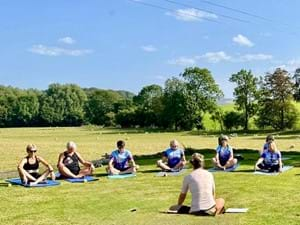
This post answers the basics of when, why, how cyclists can try yoga.
When I started offering post ride restorative yoga on Seafern Adventure cycling holidays some cyclists would smile politely and say it’s not for me. I’m a cyclist and yogi and I understand, for most riders, the word ‘yoga’ conjured up images of svelte, super flexible hippies tying themselves into binds or impossible head stands. However, when the skeptical give it a go on our holidays something wonderful happens. They love it!
We tailor classes to include stretches that ease cyclists out of their fixed riding position, relieving stiffness and potential muscle imbalances that can stem from the hours in the same posture on the bike. Previous guests have commented that they feel almost as fresh as day one in the saddle, when going into their next consecutive ride. Feedback like this speaks for itself!
Is yoga just for muscle tension? No, a few simple Sun Salutations can address areas of tightness for cyclists including upper back, lower back, hamstrings, quadricepts, hips and glutes, but yoga isn’t limited to relieving muscle stiffness. If as an older cyclist you find 6 hours in the saddle no longer guarantees you a good night sleep it might be because your nervous system is struggling to adjust from the aerobic ‘fight or flight’ status into a calmer state necessary for rest. The slow, deep nasal breathing adopted from Ashtanga yoga can help to calm the nervous system making it easier for your body to fall into and, more importantly, stay in a deep restorative sleep.
So, what are your options as a novice yogi? Ideally, find a teacher accustomed to working with cyclists or other endurance sports people. There are various styles of yoga, from the strenuous 'Ashtanga' that warms up the muscles to restorative ‘Yin’ where you hold deep stretches for up to five minutes. Ashtanga and Vinyasa can help build core and upper body strength whilst improving balance and most classes have a good pace for aerobic junkies. Warm up and warm down sessions should also include some Hatha style static stretches targeting areas of tightness and improving flexibility for cyclists.
How long to hold each stretch is a much debated topic. Some will say 20 to 60 seconds is sufficient and this is undoubtedly better than not stretching out at all. Although, advocates of yin will argue that muscles relax after the first minute, allowing a deeper gentle stress to reach fascia, ligaments, and joints. It’s worth trying a mix of styles to find out what works for you.
When to practice yoga? Research shows that static stretching temporarily reduces muscle power, so schedule yoga for after your ride, in the evening or on a rest day.
